
Երկու հոգեւոր պետերու միջեւ տեղի ունեցած առանձին հանդիպումին յաջորդեց պաշտօնական խօսքերու փոխանակումը՝ Վեհափառ Հայրապետին պատուիրակութեան անդամներուն եւ Վատիկանի ներկայացուցիչներուն ներկայութեան:
Նորին Սրբութիւնը իր խօսքին մէջ անդրադարձաւ Հայ եկեղեցւոյ ու Վատիկանի միջեւ գոյութիւն ունեցող պատմական յարաբերութեան, որ աւելի լայն ծաւալ ստացած է Կիլիկեան թագաւորութեան շրջանին, 11-րդ դարէն ետք: Այս յարաբերութիւնը աւելի զարգացաւ միջ-եկեղեցկան շարժումի յառաջացումով եւ իր արտայայտութիւնը գտաւ աստուածաբանական երկխօսութիւններու եւ միջ-եկեղեցական հանդիպումներու ու գործակցութեանց ճամբով: Արամ Ա. Սրբազնագոյն Կաթողիկոս ապա անդրադարձաւ երկու կարեւոր կէտերու.
ա) Ան իր ջերմ շնորհակալութիւնը յայտնեց Հայոց Ցեղասպանութեան եւ հայ ժողովուրդի իրաւունքներու վերատիրացման գծով Վատիկանի ցուցաբերած նեցուկին, ինչպէս նաեւ Արցախ ժողովուրդի ինքնորոշման իրաւունքին զօրակցութեան գծով:
բ) Վեհափառ Հայրապետը ողջունեց Վատիկանի զօրակցութիւնը Լիբանանի գծով՝ յիշեցնելով, թէ Լիբանանը ողջ հայութեան կեանքին մէջ կարեւոր տեղ ունի, որովհետեւ ան եղած է Ցեղասպանութենէն ետք հայ ժողովուրդին վերազարթօնքի կեդրոնը: Հայրապետը նաեւ ընդգծեց Լիբանանի կարեւորութիւնը իբրեւ քրիստոնեայ-իսլամ համակեցութեան երկիր:
Ապա, շեշտելով միջ-եկեղեցական յարաբերութեանց յատուկ կարեւորութիւնը՝ Արամ Ա. Կաթողիկոս ըսաւ, թէ Մեծի Տանն Կիլիկիոյ Կաթողիկոսութիւնը նո՛յն ոգիով ու յանձնառութեամբ պիտի շարունակէ իր սերտ գործակցութիւնը Վատիկանի եւ ընդհանրապէս Կաթոլիկ եկեղեցւոյ հետ:
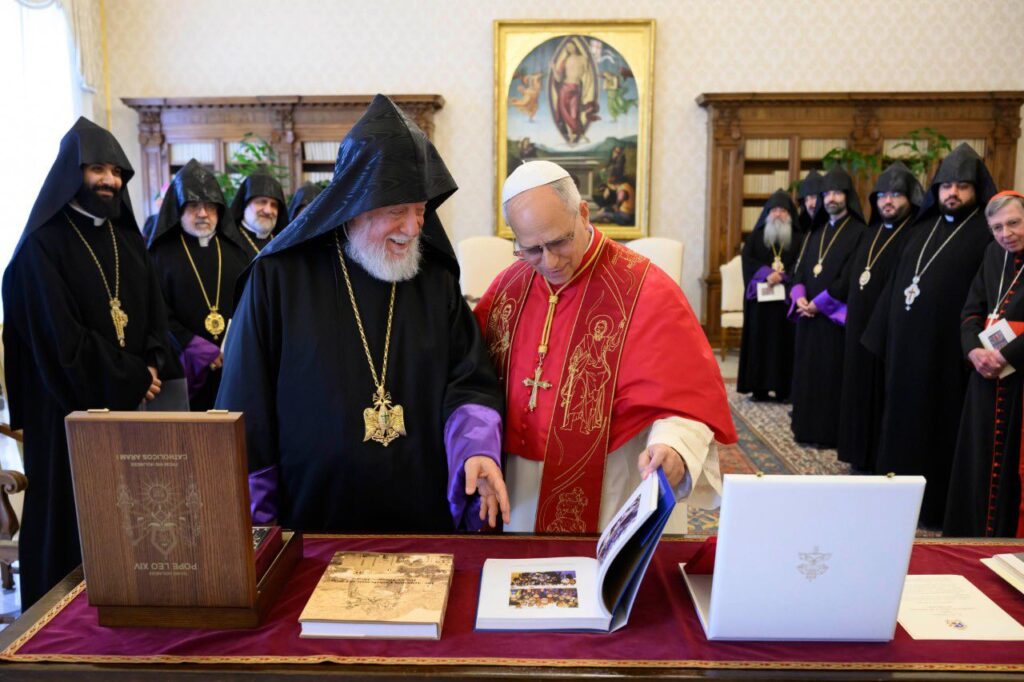
Լեւոն ԺԴ. Սրբազան Քահանայապետը իր պատգամին մէջ դարձեալ անդրադարձաւ յատկապէս Կիլիկեան շրջանին հայ եկեղեցւոյ ու Կաթոլիկ եկեղեցւոյ յարաբերութեան եւ ապա անոր զարգացման, երբ Կիլիկիոյ Կաթողիկոսութիւնը փոխադրուեցաւ Անթիլիաս, Լիբանան: Այս ծիրէն ներս ան նաեւ ողջունեց Արամ Ա. Վեհափառ Հայրապետին կարեւոր դերը միջ-եկեղեցական շարժումի ծիրէն ներս, յատկապէս Եկեղեցիներու Համաշխարհակին Խորհուրդին ճամբով եւ Կաթոլիկ եկեղեցւոյ հետ գործակցութիւնը աւելի ծաւալելու առումով: Իր խօսքին մէջ ան նաեւ յիշեց Սուրբ Ներսէս Շնորհալի հայրապետը՝ որպէս ախոյեան միջ-եկեղեցական յարաբերութեանց, եւ Վեհափառ Հայրապետին այցելութեան առիթով, առաջին անգամ ըլլալով յայտարարեց, թէ կաթոլիկ եկեղեցին, Սուրբ Ներսէս Շնորհալի մեծ հայրապետը ներառած է Հռոմէական եկեղեցւոյ Յայսմաւուրքին մէջ եւ այսուհետեւ անոր յիշատակութիւնը պիտի կատարուի Կաթոլիկ եկեղեցւոյ կողմէ եւս։ Պապը նաեւ ընդգծեց Լիբանանի կարեւորութիւնը թէ՛ շրջանի քրիստոնէութեան համար եւ թէ՛ քրիստոնեայ-իսլամ համակեցութեան իմաստով:
Պաշտօնական խօսքերու փոխանակումէն ետք, Վեհափառ Հայրապետը ներկայացուց պատուիրակութեան անդամ սրբազան հայրերը։ Ապա, տեղի ունեցաւ նուէրներու փոխանակում: Հայրապետը Պապին նուիրեց Բարձրբերդի Աւետարանի կրկնօրինակը, որ պատրաստուած է Կաթողիկոսարանին կողմէ, իսկ Պապը՝ Նիկիոյ Ա. Տիեզերական ժողովը ներկայացնող պղինձէ քանդակ:
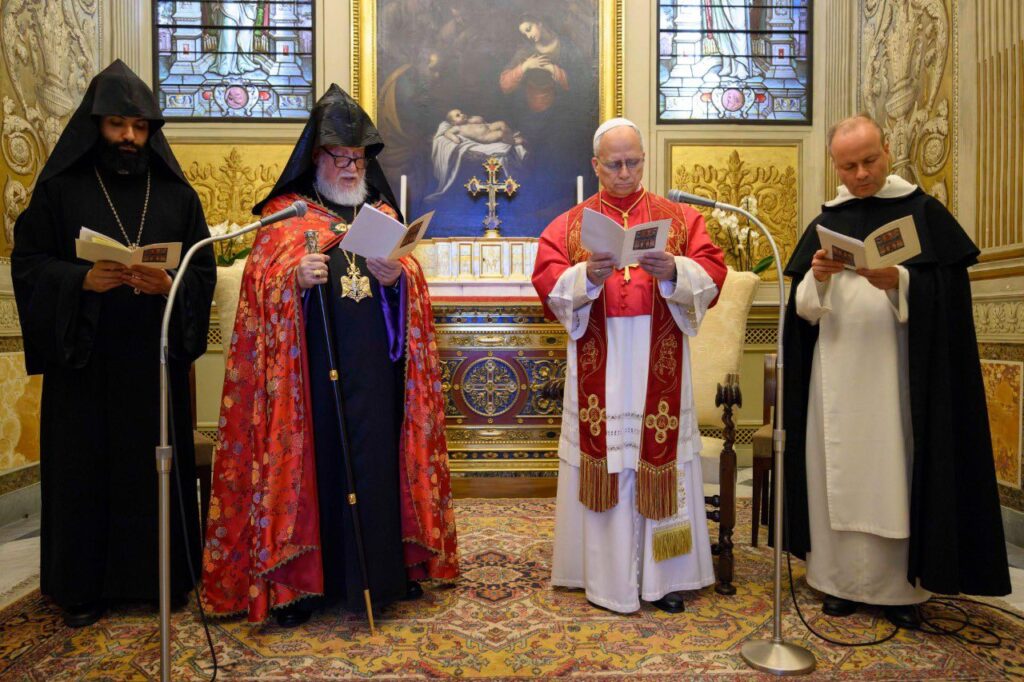
Յաջորդիւ, Առաքելական Ապարանքի Ուրբանոս Ը. մատրան մէջ (Urban VIII Chapel), Լեւոն ԺԴ. Պապին եւ Արամ Ա. Վեհափառ Հայրապետին նախագահութեամբ տեղի ունեցաւ միացեալ եկեղեցական արարողութիւն մը, որ պատրաստուած էր յատկապէս Հայ եկեղեցւոյ ծէսէն առնուած աղօթքներով ու շարականներով:
— — —
EXCHANGE OF ADDRESSES BETWEEN CATHOLICOS ARAM I AND POPE LEO XIV
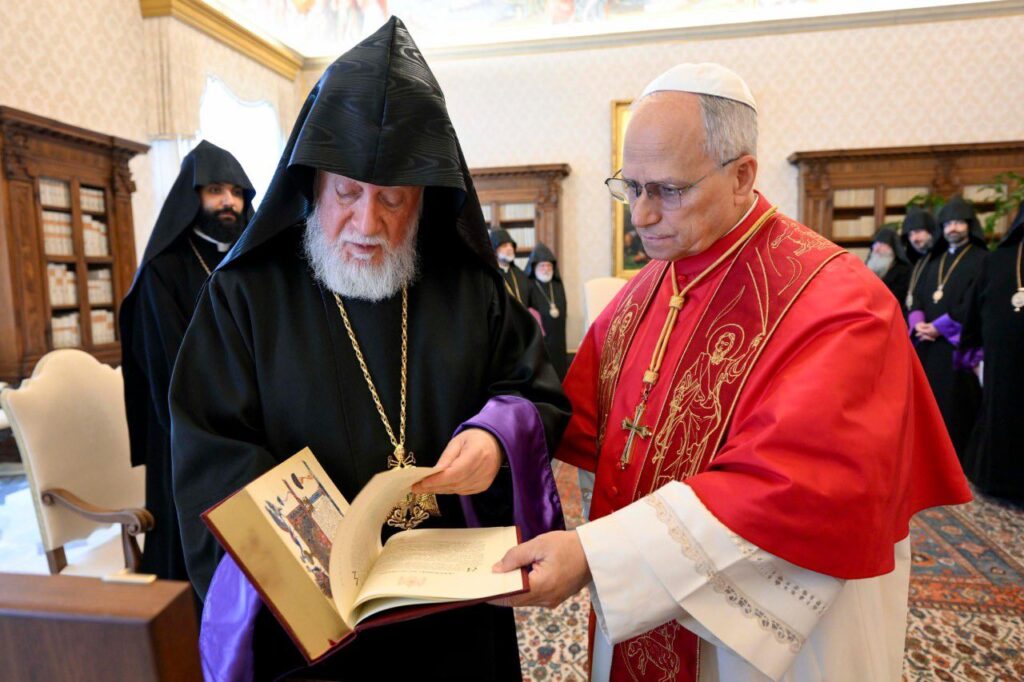
The private meeting between the two spiritual leaders was followed by an official exchange of addresses in the presence of members of His Holiness’s delegation and representatives of the Vatican.
In his address, His Holiness Aram I referred to the historic relationship between the Armenian Church and the Vatican, which expanded significantly during the Cilician Armenian Kingdom in the 11th century and later. This relationship was further strengthened with the emergence of the ecumenical movement and found expression through theological dialogues, inter-church meetings, and various forms of cooperation. Catholicos Aram I then highlighted two important points:
I) He expressed his deep gratitude for the support shown by the Vatican regarding the Armenian Genocide and the restoration of the rights of the Armenian people, as well as for its support of the right of self-determination of the people of Artsakh.
II) His Holiness welcomed the Vatican’s support for Lebanon, recalling that Lebanon occupies a special place in the life of the Armenian nation, as it became the center of the renaissance of the Armenian nation following the Genocide. He also emphasized Lebanon’s importance as a country of Christian-Muslim coexistence.
Underscoring the special importance of inter-church relations, His Holiness Aram I stated that the Catholicosate of the Great House of Cilicia would continue its close cooperation with the Vatican and, more broadly, with the Catholic Church in the same ecumenical spirit and commitment.
In his address, His Holiness Pope Leo XIV likewise referred to the relationship between the Armenian Church and the Catholic Church, particularly during the Cilician period, and later to its further development after the Catholicosate of Cilicia was transferred to Antelias, Lebanon. Within this context, he also praised the important role of His Holiness Aram I in the ecumenical movement, especially through the World Council of Churches and in expanding cooperation with the Catholic Church. In his remarks, Pope Leo XIV referred to Saint Nerses Shnorhali as a champion of inter-church relations. “My thoughts turn to Saint Nerses the Gracious, Catholicos of Cilicia, who may be regarded as a pioneer of ecumenism – and whose recent inclusion in the Roman Martyrology is a further example of that “ecumenism of the saints” which already unites our Churches,” stated His Holiness. Pope Leo further stressed the importance of Lebanon both for Christianity in the region and as a model of Christian-Muslim coexistence.
Following the official exchange of addresses, His Holiness Aram I introduced the archbishops, bishops and clergy who were members of the delegation, after which gifts were exchanged. The Catholicos presented Pope Leo with a replica of the Gospel of Partserpert, while the Pope offered a bronze sculpture depicting the First Ecumenical Council of Nicaea.
Subsequently, a joint service was held in the Urban VIII Chapel of the Apostolic Palace under the presidency of Pope Leo XIV and Catholicos Aram I. The ceremony consisted of prayers and hymns drawn from the liturgical tradition of the Armenian Church.