
Ethics, issues and the future of humanity
By His Holiness Catholicos Aram I of the Great House of Cilicia
Part II
In the past, power was mainly identified with military might, then, economy came to complement and strengthen the military power. AI became a source of huge power that is capable of transforming the very ethos of humans and the fabric of society in all its aspects.
The benefits of AI are immense, and its role is one of assisting human beings. In fact, within seconds it writes, collects, communicates, re-orders, organizes, analyzes, reminds, responds, facilitates, assesses, translates, evaluates, and does most of the things pertaining to our daily life. Its contribution to education, science, and social media is enormous. AI performs all its functions through proper instruments like ChatGPT, Gemini, X, or any other chatbots, based on data. As a system, AI cannot create or invent, it cannot function without facts and information. Simply, AI cannot replace human intelligence, it can only help it. The human mind creates, AI only analyzes. The human mind invents, AI reorders. The human mind decides; AI implements. Experts believe that AI may soon become an indispensable utility, like electricity, water, or the Internet, for people to purchase from companies. Schools may become irrelevant in their present system because of extensive use of AI in education. The increasing applications of AI in military systems is revolutionizing defence in several ways. The impact of AI on the economy is tremendous. Layoffs will significantly rise, causing mass unemployment. AI will steadily push advisory companies to decrease the value of the human advisor, since AI advice is considered more reliable, faster, and less costly than that of a human. Therefore, in the near future, human intelligence and creativity may not be required anymore. The signs of these future possibilities are already seen now.
The way AI is evolving and the expansion of its multi-dimensional function indicate that it is not simply a tool in the hands of people, but it has a powerful capacity susceptible to growing even further. New paradigms and systems of AI are emerging with lightning pace and with more capabilities, moving beyond being an assistant tool to perform complex work autonomously. This process suggests that AI’s function will not be limited to data analysis; it will also cover creative areas uniquely reserved for human intelligence. Hence, besides its untold benefits, we cannot ignore the potential risks of AI. As a technological power, AI can penetrate all kinds of systems and programs and disrupt, disorient, and disintegrate their functions. AI is not value-oriented, it does not make distinctions between moral and immoral, good and evil; it does not make a choice and pass judgment. We are at a crucial period in the humanity-AI relationship: a period marked by confusion, prediction, trust and fear. Comprehensive and objective research is needed on the benefits and possible threats of AI, as well as on its right use, misuse, and abuse. We are facing a number of issues and questions that require serious discussion. Let me highlight a few points for further study and reflection:
1. AI is a powerful system. The POWER that AI possesses and produces is far beyond that of an ordinary machine or system. Opportunity and risk generated by AI are intertwined. AI-based technologies, which are launched at a rapid pace and on a large scale, are embracing multiple spheres of societal life. With its multiple functions and powerful capacity, along with generating unprecedented advances in manifold areas, levels and layers of human life, AI is creating fear and uncertainty, insecurity and confusion. It is causing injustices and discrimination, unemployment and oppression, marginalization and manipulation by concentrating economic power in the hands of the rich and powerful, and by exploiting human vulnerabilities, revealing privacies, exposing confidentialities, displaying deficiencies. In the past, power was mainly identified with military might, then, economy came to compliment and strengthen the military power. AI became a source of huge power that is capable of transforming the very ethos of humans and the fabric of society in all its aspects.
Indeed, AI needs a brake system and clear regulation. We should not have blind trust and uncritical use of AI. I fully agree with the call of His Holiness Pope Leo XIV that even regulation is insufficient; AI must be ‘disarmed’.
In fact, because of its unparalleled financial benefits, AI has created fierce competition between tech companies, which are manipulating both benefits and risks of AI. Due to its strong impact on geopolitical realities, the AI-race between superpowers is acquiring predominance on the agenda of international community. Experts believe that AI may soon upgrade itself by building more solid infrastructures and creating more advanced models without human intervention. In the face of such a rapid advance of AI and before humans lose total control, slowing down its powerful process has become a growing concern even in the AI-related tech community. Any form of power created by human beings is always ambivalent, ambiguous, and even scary. Indeed, the responsible use of such power should remain a global ethical challenge.
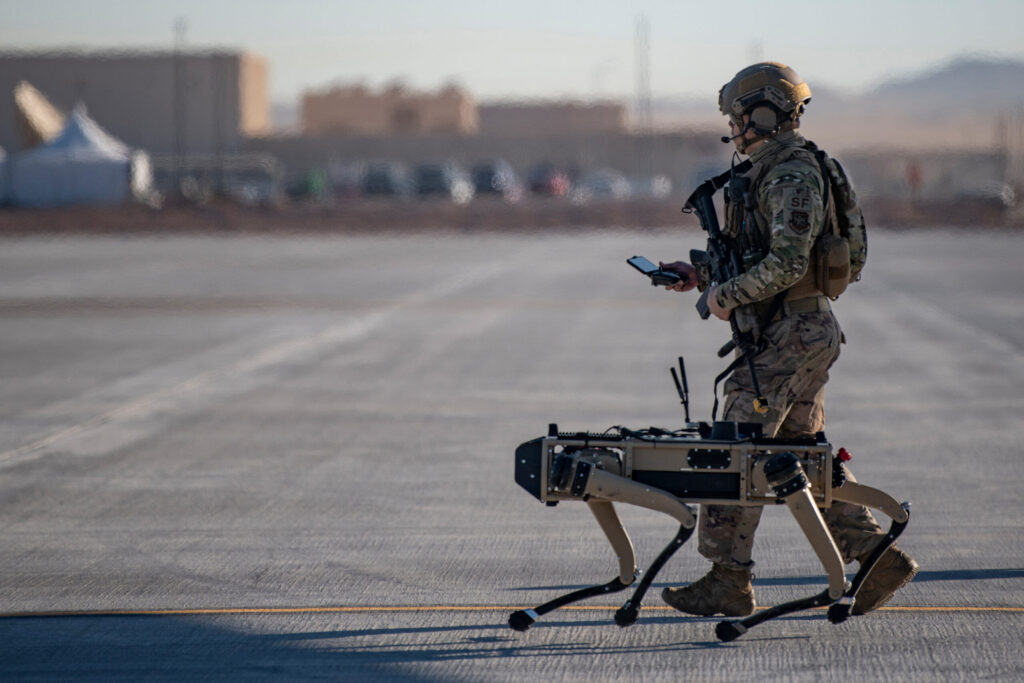
2. Due to its rapid growth, immense capacity, and particularly the ambiguous nature of its function and purpose, as I pointed out, AI contains potential RISKS. We should not underestimate the stark warning of the AI architects and experts, including the Godfather, Geoffrey Hinton, about AI’s risks, which are not to come but are present reality. Created and empowered by human beings as a tool, AI has the ability to develop into an autonomous system and a decision maker. The chilling reality is that by surpassing human intelligence, AI will not need human assistance nor permission. Thus, besides being a unique opportunity for the substantial advance of human life, AI may soon become a source of terrible fear. According to estimates of AI companies, the future generations of AI could become even more powerful. As a result, managing it could be almost impossible. Experts are already identifying the short- and long-term risks that it may generate. Hence, a monumental achievement of human intelligence, AI may, in a foreseeable future, build itself into a super-smart and super-intelligent force, considerably reducing human intelligence and taking over human ability to think and make decisions, thus making humans increasingly obsolete. Containing the powerful surge of AI is an urgent imperative.
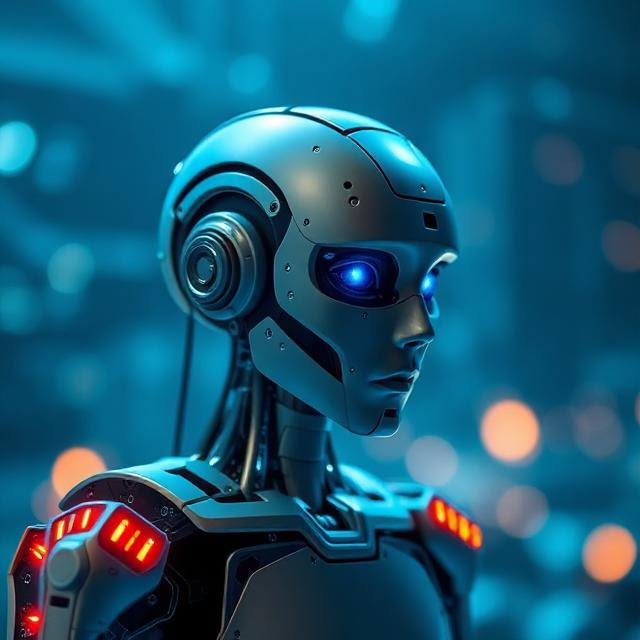
The problem is that when AI’s role is shifted from one of assistance into decision-maker, then it is transformed into a system of terrifying dangers. Tech companies remind us that by surpassing human intelligence, AI can, in a short period of time, outperform humans in multiple areas of life and make human beings powerless, useless, and exclusively dependable. And in this way, the human species may slowly disappear, giving way to humanoid robots and eventually creating “digital beings” more intelligent than humans. Clearly, AI may become more and more of an existential threat to humanity by heading towards an “anti-human” (according to some experts a “transhuman”) future.
Aram I
(To be continued)
Originally published in the June 2026 issue of AGBU Magazine